


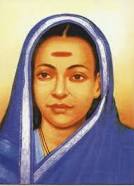
SavitribaiJyotiraoPhule (3 January 1831 – 10 March 1897) was an Indian social reformer and poet. Along with her husband,JyotiraoPhule, she played an important role in improving women’s rights in India during British rule. The couple founded the first women’s school at Bhide Wada in Pune in 1848. She also worked to abolish discrimination and unfair treatment of people based on caste and gender. She is regarded as an important figure of the Social Reform Movement in Maharashtra.
Savitribai was taught to read and write by her husband, Jyotirao. As one of the very few indigenous literate women of the time, she played a full part in her husband’s social reform movement by becoming a teacher at the schools he started for girls and later for the so called untouchables in Pune. For this task, she had to endure a lot of abuse at the hands of the orthodox society of Pune. The couple were felicitated by the then colonial government of Bombay Presidency in 1850’s for this work.
During the 19th century, arranged marriages before the age of maturity was the norm in the Hindu society of Maharashtra. Since mortality rates were high, many young girls often became widows even before attaining maturity. Due to social and cultural practices of the times, widow remarriage was out of question in many upper castes and therefore prospects for the young widows from those castes were poor. The 1881 Kolhapur gazetteer records that widows at that time used to shave their heads, and wear simple red saris and had to lead a very austere life with little joy. Despite being required to look austere, the young widows often used to become targets of lust by men and become pregnant. Upon being found out, the widows used to be thrown out of home by their families. To help these women, Savitribai and Jyotirao started a home for widows. Their adopted son, Yashwant was born to a brahmin widow.
Tiffany Wayne has described Phule as “one of the first-generation modern Indian feminists, and an important contributor to world feminism in general, as she was both addressing and challenging not simply the question of gender in isolation but also issues related to caste and casteist patriarchy.”
- Two books of her poems were published posthumously, KavyaPhule (1934) and BavanKashiSubodhRatnakar (1982).
- The Government of Maharashtra has instituted an award in her name to recognize women social reformers.
- In 2015, the University of Pune was renamed as SavitribaiPhule Pune University in her honour.
- On 10 March 1998 a stamp was released by India Post in honour of Phule.
SavitribaiPhule wrote many poems against discrimination and advised to get educated.
Go, Get Education, Be self-reliant, be industriousWork, gather wisdom and riches,
All gets lost without knowledge, We become animal without wisdom,Sit idle no more,
go, get education
End misery of the oppressed and forsaken,You’ve got a golden chance to learn, So learn and break the chains of caste, Throw away the Brahman’s scriptures fast.